

Finishing a renovation feels like crossing the finish line. The tools are gone, the surfaces look clean, and the space finally starts to feel like it’s coming together. Most people take that as a sign that everything is ready to go.
But what’s left behind after construction is not always visible. Fine dust settles quietly into surfaces, moves through the air, and lingers in places you wouldn’t normally think to check. Even when a space looks clean, it may not actually be ready to live or work in just yet.
What Construction Dust Is Really Made Of

Construction dust is not the same as the dust you deal with day to day. It comes from materials that are cut, drilled, or sanded during the renovation process.
This often includes:
- Silica from concrete, tiles, and stone
- Drywall and gypsum particles
- Wood dust from sanding and cutting
- Residue from paint, adhesives, and sealants
These particles are extremely fine. Because of that, they do not settle quickly, and they can spread further than expected. Instead of staying in one area, they move through the space and settle in layers over time.
Why Standard Cleaning Methods Don’t Work
A quick clean after renovation might make the space look better, but it rarely solves the real problem. Most household cleaning methods are not designed to deal with fine construction dust.
For example:
- Wiping surfaces can move dust around instead of removing it
- Regular vacuums may push fine particles back into the air
- Cleaning one area can disturb dust in another
- Dust tends to settle again shortly after cleaning
This is why some spaces never quite feel fully clean, even after multiple attempts.
Where Dust Settles and Stays

One of the challenges with construction dust is where it ends up. It does not just sit on obvious surfaces like floors and countertops.
It often settles in:
- Air vents and HVAC systems
- Carpets, rugs, and upholstered furniture
- Curtains and soft fabrics
- Inside cabinets and drawers
- Light fixtures and ceiling edges
- Behind appliances and built-in units
Once dust gets into these areas, it can stay there and slowly re-enter the space over time.
Construction Dust Health Risks You Shouldn’t Ignore
Even if the effects are not immediate, fine dust can still affect how a space feels and functions. It can also impact indoor air quality in ways that are easy to overlook.
Some common issues include:
- Irritation in the nose and throat
- Dry or uncomfortable eyes
- Skin sensitivity
- Discomfort when breathing in enclosed spaces
These effects can be more noticeable for children, older adults, or anyone sensitive to air quality. It is not about creating concern, but about understanding that proper cleaning plays a role in maintaining a stable environment.
Post-Construction Cleaning in Los Angeles: Why It Requires Precision
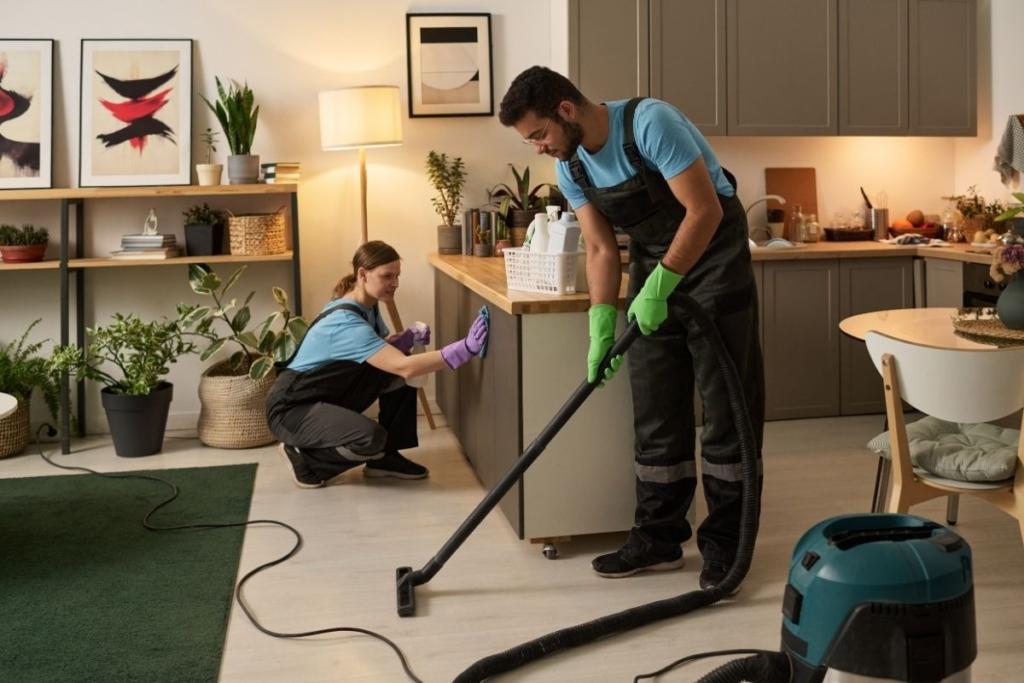
In a city like Los Angeles, dust does not stay contained for long. Air movement, nearby construction, and daily activity all play a role in how particles spread.
This is where post-construction cleaning in Los Angeles becomes more than just a final step. It requires a careful and methodical approach. The goal is to remove dust in a way that prevents it from circulating again.
This typically involves:
- Using equipment that captures fine particles effectively
- Following a clear cleaning sequence
- Addressing both visible surfaces and hidden areas
Without this level of detail, dust can continue to move through the space even after cleaning.
What Professional Post-Construction Cleaning Involves
A proper post-construction clean is done in stages. Each step builds on the last to make sure the space is fully addressed.
The process usually includes:
- Debris removal
Clearing out larger materials and leftover waste
- Fine dust removal
Using specialized equipment to capture smaller particles
- Detailed surface cleaning
Cleaning all areas, including those that are easy to miss
- Final inspection
Checking that dust has been properly removed from key areas
Professional teams use tools like HEPA-filter vacuums, which are designed to trap fine dust instead of releasing it back into the air.
When Proper Cleaning Becomes Essential
There are certain moments when post-construction cleaning should not be delayed.
These include:
- Right after renovation or construction work is completed
- Before moving into a newly updated space
- Before listing or showing a property
- Before reopening a commercial space
Waiting too long can allow dust to spread further, making the process more difficult later on.
Why More Property Owners Choose Cleaning Services in Los Angeles
Post-construction cleaning can quickly become overwhelming without the right tools and process. This is why many people rely on cleaning services in Los Angeles to handle it properly.
Some of the main reasons include:
- More consistent and reliable results
- Access to proper equipment
- Time savings
- Ability to handle larger or more complex spaces
It is not just about convenience. It is about making sure the job is done thoroughly.
The Long-Term Impact of Incomplete Dust Removal
If fine dust is not fully removed, it does not simply disappear. It continues to move through the space and settle again over time.
This can lead to:
- Ongoing dust buildup
- Reduced air quality
- More frequent cleaning needs
- Gradual wear on surfaces and materials
Addressing it early helps avoid these long-term issues.
A Clean Space Should Also Be a Safe Space
A finished renovation should feel complete, not uncertain. Cleaning is part of that process, especially when it comes to what cannot be seen.
At Los Angeles Cleaning Company, we approach post-construction cleaning in Los Angeles with a clear and structured method. We focus on removing fine dust at its source, not just from the surface. Our team works through each area carefully to make sure nothing is left behind.
We provide dependable cleaning services in Los Angeles for both residential and commercial spaces. Our goal is to leave each property in a condition that feels ready, comfortable, and safe to use.
